
What Are the 3 Ingredients in the Gelatin Trick?

The gelatin trick uses three ingredients: unflavored gelatin, a hot liquid to dissolve it, and a cold liquid to set it.
That’s the whole thing. One tablespoon of gelatin, half a cup of hot water, half a cup of cold water — chilled until it sets, eaten 15 to 30 minutes before a meal.
Most viral versions add a fourth item for flavour — lemon juice, cranberry juice, apple cider vinegar — which is why the “3 ingredients” question gets so many different answers online. The base is always the same three.
The core 3 ingredients: what you actually need
1. Unflavored gelatin
The backbone of the trick. Unflavored gelatin is close to pure protein — no sugar, no dyes, no sweeteners. A standard 7 g envelope carries roughly 6 g of protein for about 20–25 calories, depending on the brand’s label.
This is not the same as a flavoured dessert packet. Those are mostly sugar or artificial sweetener with a small amount of gelatin, and using one defeats the purpose. Look for a product whose ingredient list reads “gelatin” and nothing else.
2. A hot liquid
Gelatin will not dissolve in cold liquid — it clumps into rubbery lumps that never fully hydrate. Hot water, herbal tea or broth melts the granules so they disperse evenly, which is what lets the mixture set into a smooth gel instead of a gritty one.
Hot, not boiling. Water at a rolling boil can weaken gelatin’s setting strength, so aim for hot-tap-to-just-steaming.
3. A cold liquid
Cold water, chilled tea or a low-calorie juice brings the temperature down so the mixture sets in the fridge rather than sitting warm for an hour. It also doubles the volume, which matters more than it sounds — a bigger portion of the same calories is the entire mechanism behind why this feels filling.
The optional fourth: flavour
Plain gelatin and water tastes like almost nothing, which is why nobody sticks with it. A teaspoon of lemon juice, a splash of unsweetened cranberry, or a few drops of stevia costs you almost no calories and makes the difference between a habit and a one-off experiment.
Strictly, that makes it four ingredients. Every viral version does it anyway.
The 3-ingredient gelatin trick recipe
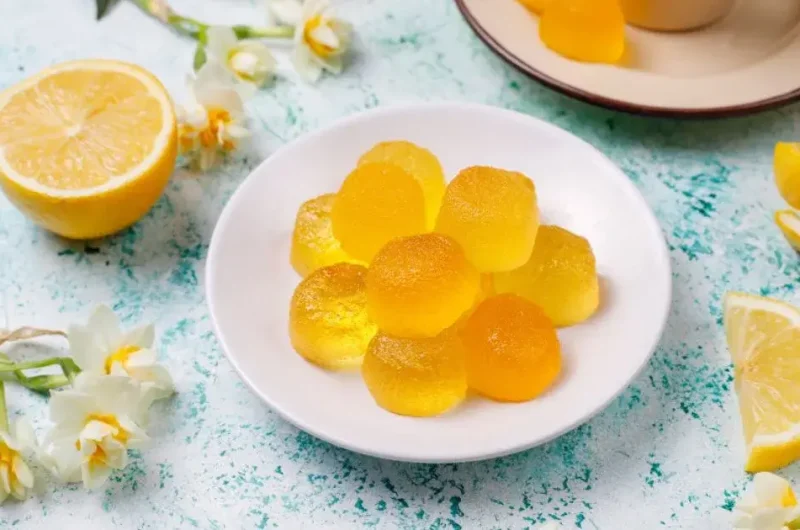
The 3-Ingredient Gelatin Recipe
Servings
2
servingsPrep time
10
minutesChill Time
1
hour30
minutesCalories
90–120
kcalFor a truly weight-loss–friendly version, stick with unflavored or sugar-free gelatin to avoid added sugars. Store the cubes in an airtight container in the refrigerator for up to four days — quick to grab whenever hunger strikes.
Ingredients
1 tablespoon unflavored gelatin powder (or sugar-free flavored version if you prefer taste)
1 cup plain nonfat Greek yogurt
1 cup unsweetened berries, fresh or frozen
Directions
- Add the berries to a small saucepan with 2 tablespoons of water. Warm for 3–5 minutes until the berries soften and release juice.
- Mash the berries with a fork or blend them for a smoother texture.
- In a small bowl, sprinkle the gelatin over 2 tablespoons of cold water. Let it sit for 5 minutes.
- Add the bloomed gelatin to the warm berry mixture. Stir until fully dissolved. Do not boil it.
- Let the berry-gelatin mixture cool for a few minutes so it is warm, not hot.
- Whisk the Greek yogurt in a bowl until smooth.
- Slowly whisk the berry-gelatin mixture into the yogurt.
- Divide into 2 small cups or jars.
- Refrigerate for at least 2–4 hours, or until set.
Why you’ll see different “3 ingredients” everywhere
Search this question and you’ll get contradictory answers. That’s because the flavour component changes from version to version while the gelatin-plus-hot-plus-cold base stays fixed.
You’ll see it sold as the Dr Oz pink gelatin recipe, the Jillian Michaels gelatin recipe and the Mark Hyman gelatin trick, but the base never changes.
| Version | What changes |
|---|---|
| Basic | Gelatin + hot water + cold water |
| Jillian Michaels version | Cold liquid swapped for unsweetened cranberry juice, plus apple cider vinegar |
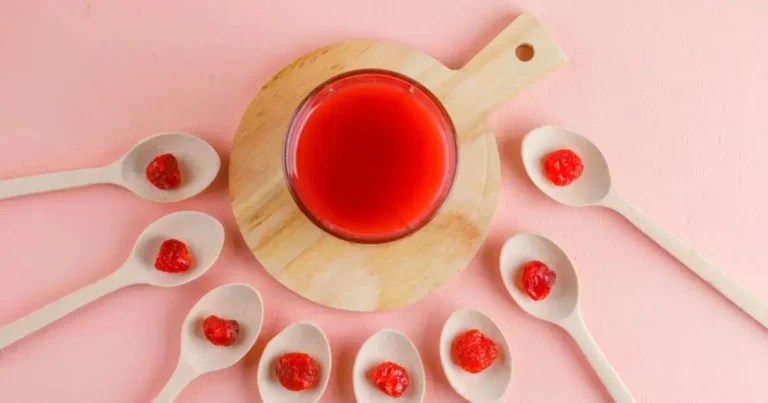
| “Pink” version | Cold liquid swapped for a red/pink juice, which is where the colour comes from |
| Mark Hyman version | Water swapped for bone broth or herbal tea |
Worth knowing before you go looking: none of these celebrities published these recipes. Their names got attached to the trend by creators, not by them. The recipes themselves are harmless — the attribution isn’t real.
Does the gelatin trick actually work?
Gelatin trick batch calculator
Scales the ratio correctly for however many servings you’re prepping. Wrong gelatin-to-liquid is the main reason it fails to set.
Version
Keeps 4–5 days covered in the fridge.
You’ll need
24cal
per serving
6.0g protein
per serving
per serving
24cal total
whole batch
whole batch
Partly, and there is a real trial behind it — which almost no page covering this trend mentions.
Veldhorst and colleagues (2009) gave 24 healthy adults breakfasts built around different single proteins — casein, soy, whey, whey without glycomacropeptide, alpha-lactalbumin, or gelatin — then measured how much they ate at an unrestricted lunch afterwards.
After the gelatin breakfast, participants ate about 20% less at lunch than after casein, soy or whey. Gelatin also scored higher on measured satiety, and the effect held regardless of the protein dose used.
Three things that result does not mean
- It measured one meal, not weight loss. Eating 20% less at a single lunch is not the same as losing fat over months. No trial has followed the gelatin trick over a meaningful period.
- The mechanism isn’t what people claim. Ghrelin and GLP-1 — the appetite hormones usually invoked in viral explanations — did not change. Whatever produced the effect, it wasn’t those.
- It was a full breakfast, not a 25-calorie cup. The study used a proper protein-dosed meal. A tablespoon of gelatin in water is a much smaller intervention, and you should expect a much smaller effect.
The fair summary: gelatin genuinely does something for short-term fullness, better than several more fashionable proteins.
It does not burn fat, raise your metabolism or change how you store calories, and anything claiming otherwise is inventing it.
The problem nobody mentions: gelatin is an incomplete protein
Every page about this trend calls gelatin “protein-rich.” That’s true — it’s about 85–90% protein by dry weight. What they leave out is that it’s not a complete protein.
Gelatin contains no tryptophan at all, and it’s low in isoleucine, threonine and methionine. Roughly two-thirds of it is glycine, proline and hydroxyproline. Those are useful for connective tissue, but they don’t cover your essential amino acid needs.
Practically, this means two things:
- Don’t count it toward your protein target the way you would count eggs, chicken or whey. Six grams of gelatin protein is not nutritionally equivalent to six grams of complete protein.
- Don’t let it replace a meal. Used as a pre-meal appetiser it’s fine. Used as a meal substitute repeatedly, it’s a way to under-eat essential amino acids.
This is also the difference between gelatin and collagen peptides, which people often use interchangeably — see how much gelatin a day for the dosage side.
A more filling variation, if plain gelatin bores you
The classic three ingredients are what the trend refers to, but they make a thin, low-satiety cup. If you want something that works better as an actual snack, swap the cold liquid for Greek yogurt and add berries.
| Classic version | Yogurt & berry version | |
|---|---|---|
| Ingredients | Gelatin, hot water, cold water | Gelatin, Greek yogurt, berries |
| Calories | ~25 | ~110 |
| Protein | 6 g (incomplete) | ~14 g (complete, from the yogurt) |
| Fibre | 0 g | ~2 g |
| Best used as | Pre-meal appetiser | Snack replacement |
Method: bloom the gelatin in 2 tbsp cold water, dissolve in 2 tbsp hot water, cool for five minutes, then fold into 150 g of plain Greek yogurt with a handful of berries and chill until set.
The yogurt fixes the amino acid gap — dairy protein supplies the tryptophan gelatin lacks. This is a genuinely better food. It just isn’t what people mean by “the gelatin trick.”
Five mistakes that stop it working
- Adding gelatin straight to hot water. Bloom in cold first, always, or you get lumps that never dissolve.
- Using a flavoured dessert packet. Mostly sugar, very little gelatin. Different product entirely.
- Taking it after the meal. The entire point is arriving at the table already partly full. Afterwards it’s just an extra 25 calories.
- Treating it as a meal. 25 calories of incomplete protein is not lunch, and using it that way tends to produce a rebound later.
- Expecting it to do the work. Eating 20% less at one meal only matters if you don’t make it back at the next one.
Who should skip it
- Vegetarians and vegans. Gelatin is an animal product, made from collagen in hide and bone. Agar is a plant-based setting agent, but it has no protein and none of the satiety rationale.
- Anyone recovering from bariatric surgery should follow their team’s liquid-stage protocol rather than a viral recipe — see the bariatric gelatin guide.
- Anyone with kidney disease or on a protein-restricted diet, without checking with their doctor first.
- Anyone with a history of restrictive eating. Appetite-suppression rituals are a poor fit, however low-calorie.
Frequently asked questions
What are the 3 ingredients in the gelatin trick?
Unflavored gelatin, a hot liquid to dissolve it, and a cold liquid to set it — typically 1 tablespoon of gelatin, ½ cup hot water and ½ cup cold water. Most versions add a small amount of lemon juice, cranberry juice or apple cider vinegar for flavour, which is why the answer varies across recipes.
How long before a meal should I take it?
15 to 30 minutes. Any earlier and the fullness fades before you eat; any later and you’re adding calories to a meal that’s already underway.
Can I use Jell-O instead of unflavored gelatin?
No. Flavoured dessert mixes are mostly sugar or sweetener with a small fraction of gelatin, so you get very little protein and a lot of what the trick is meant to avoid.
Is gelatin the same as collagen powder?
They come from the same source but behave differently. Gelatin gels when it cools; collagen peptides are hydrolysed further and dissolve without setting. For this trick you need gelatin — collagen peptides will not gel, so you’d get a drink rather than a set cup.
How many calories are in the gelatin trick?
About 25 calories for the classic version with plain water, essentially all of it from protein. Juice-based versions run 40 to 70 depending on how much you use.
Does it actually burn fat?
No. It can help you eat less at the next meal, which may create a calorie deficit indirectly. Gelatin has no effect on metabolic rate or fat oxidation, and no study has shown weight loss from the trick itself.
Can I make a batch for the week?
Yes — it keeps covered in the fridge for four to five days. Portion it into small cups so each one is a single pre-meal serving.
Conclusion
Three ingredients: unflavored gelatin, a hot liquid, a cold liquid. Around 25 calories and 6 g of protein, eaten 15 to 30 minutes before your biggest meal.
The one controlled trial on gelatin and appetite found people ate roughly 20% less at the following meal — a real effect, better than several proteins with far better reputations.
But it was a single meal, the hormones everyone blames weren’t involved, and the study used a full breakfast rather than a small cup.
Treat it as what it is: a cheap, near-calorie-free way to arrive at dinner slightly less hungry. It is not a fat-loss mechanism, it is not complete protein, and it should not replace a meal. Used that way it’s genuinely useful. Used as a shortcut, it does nothing at all.
Sources. Veldhorst MA, Nieuwenhuizen AG, Hochstenbach-Waelen A, et al. A breakfast with alpha-lactalbumin, gelatin, or gelatin + TRP lowers energy intake at lunch compared with a breakfast with casein, soy, whey, or whey-GMP. Clin Nutr. 2009;28(2):147–155. PMID 19185957.