
Banana Hack Recipe: What the Trend Actually Means
If you’ve been on TikTok, Instagram, or YouTube lately, chances are you’ve stumbled upon the viral banana hack recipe trend.
The so-called “banana hack recipe” trending in weight-loss ads is not a genuine recipe or a medically recognized method.
It is a bait-and-switch tactic — the ads tease a secret banana-based formula.
Instead of providing a recipe, they redirect viewers to sales funnels for unproven supplements (e.g., “Lipo Drops”).
These campaigns often use deepfake celebrity endorsements to build false credibility.
They are frequently packaged as fake news-style articles or video testimonials, designed to mislead consumers.
What’s Driving the Buzz?
What the ads promise
The videos promise an “easy” 3–4 ingredient banana drink that triggers a “bariatric‑like effect,” with sweeping claims such as losing 24 pounds in 15 days or dropping multiple clothing sizes without exercise or dietary changes.
They often cite elite institutions like Harvard and Johns Hopkins, implying clinical validation that is never linked, verifiable, or supported by peer‑reviewed studies.
Clips impersonate trusted celebrities or TV hosts to create false credibility for the “hack,” setting up the reveal that never actually arrives.
What’s Driving the Buzz?
The long-form video never reveals an actual banana hack recipe.
Instead, it pivots into a sales pitch for supplements like Lipo Drops or similar rebranded products.
These promotions rely on urgency tactics — countdown timers, limited-time offers, and pressure language.
They often display “FDA-registered facility” badges, which can be misleading.
FDA registration of a facility ≠ FDA approval of the product’s safety or effectiveness.
These funnels often feature vague company details, recurring charge traps, and refund policies that users report as difficult or impossible to redeem in practice.
Investigations and consumer explainers consistently find no clinical evidence that a banana‑based “hack” or derivative “drops” produce rapid, effortless fat loss as advertised.
Deepfakes and fake authority
The campaigns frequently deploy AI‑generated audio and visuals to mimic celebrities and anchors—such as Oprah Winfrey and Robin Roberts—falsely suggesting endorsements or TV coverage that never occurred.
The production style borrows news graphics and studio aesthetics to mask sales intent and suppress skepticism, framing the content as a segment or an interview rather than a direct‑response ad.
When the “expert” changes names across versions and no credential can be verified, it’s another hallmark of a rotating, rebranded scam network rather than legitimate health communication.
Red flags to spot quickly
- The “recipe” is teased throughout but never actually shown, replaced at the end by a supplement checkout or “extract” that claims to bottle the hack.
- Countdown timers, “only 12 bottles left,” and limited‑time claims attempt to force quick purchases without due diligence or third‑party verification.
- “FDA‑registered facility” language is used to imply validation, but registration is not approval and does not prove safety or weight‑loss efficacy.
- Cited universities, miracle enzyme stories, and dramatic testimonials arrive with no trial data, no published methods, and no reproducible evidence.
If the funnel is already in progress
Collect screenshots of the ad, landing pages, order confirmations, and any email or chat transcripts so there is a record of representations, charges, and attempts to cancel.
Contact the card issuer to dispute charges, block auto‑renewals, and monitor for additional billing from related vendors or rebranded offers that reuse the captured payment details.
Report the ad to the platform where it appeared and consider filing complaints with consumer authorities, as this documentation helps curb retargeting and domain‑hopping tactics across the same network.
What the evidence says about bananas
There is no credible clinical evidence that a specific banana “hack” or “banana drops” produce rapid fat loss or a bariatric‑like effect in the absence of a calorie deficit and broader lifestyle change.
Bananas can fit a balanced diet by contributing fiber and carbohydrate toward satiety and energy, but they do not bypass energy balance or deliver unique fat‑burning properties beyond normal nutrition physiology.
When bananas are framed as part of a high‑satiety, protein‑forward breakfast, they can support adherence and fullness, but that is categorically different from miracle‑cure marketing.
Safer, practical banana breakfasts
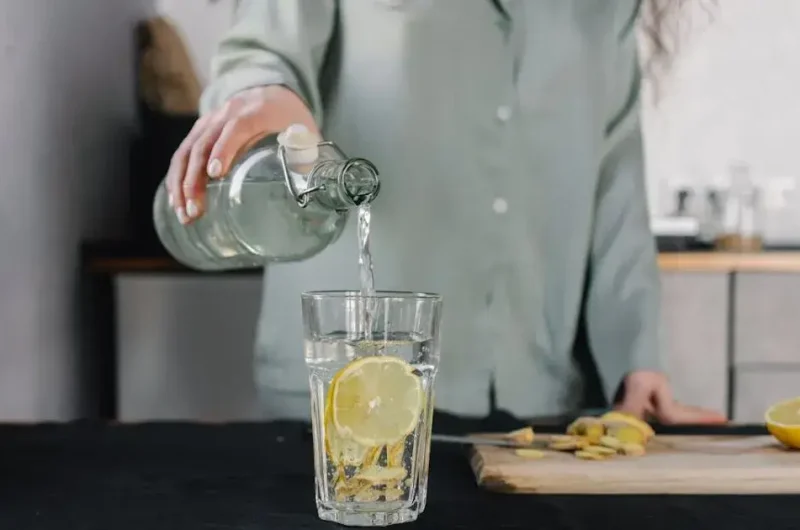
How to Make the Natural Zepbound Recipe at Home
Servings
1
servingsPrep time
3
minutesCooking time
3
minutesCalories
15–20
kcalCarbohydrates
4–5 g
Sugars
1–2 g
Fiber
0.5 g
Vitamin C
Modest (from lemon)
Ingredients
300 ml hot (not boiling) water or hot green tea (unsweetened)
Juice of ½ a lemon (fresh) — about 1 tbsp (≈8–10 ml)
1 tsp apple-cider vinegar (with “mother”) — about 5 ml (optional; for flavor)
1 slice fresh ginger (≈4–6 g), smashed or thinly sliced — or ¼ tsp powdered ginger
½ tsp ground cinnamon (optional, warming)
(Optional) 1 green tea bag instead of plain hot water — steep 2–3 minutes, remove tea bag
Ice (if you prefer it cold) and fresh mint for garnish
Directions
- Bring water to hot (not boiling) and pour into a cup. If using a tea bag, steep 2–3 minutes then remove.
- Add the squeezed juice of ½ lemon, 1 tsp apple-cider vinegar, sliced ginger and ½ tsp cinnamon. Stir well.
- Let stand 2–3 minutes so flavors infuse. Remove ginger slice if you prefer milder taste.
- Serve warm or pour over ice for a chilled drink. Drink plain — do not add sugar or honey if your goal is low calories.
Recipe Video
Notes
- Best consumed fresh. If you make extra, store covered in the refrigerator for up to 24 hours; shake before drinking.
- Safe to have 1 serving daily; if you have GERD, an ulcer, or take medications that interact with acidic liquids, check with your clinician first.
Banana-Oat Pancakes (single serving; makes ~3–4 small pancakes)
Ingredients
- 1 ripe banana
- 1 large egg
- 1/4 cup rolled oats (dry)
- 1/4 tsp baking powder (optional — makes them fluffier)
- Pinch of salt
- 1 tsp neutral oil (for skillet)
- Topping: 1/4 cup mixed berries and 2 tbsp plain yogurt (optional)
Tools
- Blender or mixing bowl + fork
- Nonstick skillet or griddle
- Spatula
Steps
- If using a blender: add the banana, egg, oats, baking powder, and pinch of salt; blend until smooth. If not using a blender: mash the banana in a bowl, whisk in the egg, then stir in the oats and baking powder.
- Heat the skillet over medium. Add 1 tsp oil and spread it to coat.
- Pour ~2–3 tbsp batter per pancake onto the skillet to make small pancakes. Cook 2–3 minutes until edges set and bubbles form, then flip and cook 1–2 minutes more until golden.
- Stack and top with berries and 2 tbsp yogurt. Serve warm.
Time
- Prep: 3–5 minutes
- Cook: 6–8 minutes
- Total: ~10–13 minutes
Estimated cost (per serving)
- $0.80–$2.00.
Calories (approximate)
Breakdown (typical values, single-serving recipe):
- Medium banana = 105 kcal
- 1 large egg = 72 kcal
- 1/4 cup rolled oats ≈ 77 kcal (½ cup ≈154 kcal → ¼ cup ≈77 kcal)
- 1 tsp oil ≈ 40 kcal
- 1/4 cup mixed berries ≈ 25 kcal
- 2 tbsp plain yogurt ≈ 30 kcal
Protein Smoothie (serves 1)
Ingredients
- 1 medium banana
- 1 cup (packed) fresh spinach
- 1 scoop protein powder (whey or plant ≈ 25 g protein) — typical ≈120 kcal
- 1 tbsp peanut butter (or 2 tbsp if you want more satiety)
- 1 cup unsweetened almond milk (or 1 cup kefir for more protein)
- A handful of ice (optional)
Tools
- Blender
Steps
- Put the almond milk (or kefir) and spinach in the blender first. Blend briefly to combine.
- Add banana, protein powder, and peanut butter. Add ice if you like it cold/thicker.
- Blend until smooth. Taste and adjust thickness with more milk or water. Pour and enjoy.
Time
- Prep & blend: ~3–4 minutes
Estimated cost (per serving)
- US: $1.50–$3.50.
Calories (approximate)
Option A — using unsweetened almond milk:
- Medium banana = 105 kcal
- 1 cup spinach ≈ 7 kcal
- 1 scoop protein powder ≈ 120 kcal
- 1 tbsp peanut butter ≈ 94 kcal
- 1 cup unsweetened almond milk ≈ 30 kcal
Realistic expectations and accountability
Sustainable fat loss hinges on maintaining a consistent calorie deficit supported by protein, fiber, and regular activity—principles that outperform “one weird trick” narratives in every rigorous comparison to date.
Replacing breakfast guesswork with a simple formula—protein anchor, fibrous produce, and controlled fats—beats miracle claims while reducing decision fatigue across the week.
For medical conditions, medications, or aggressive goals, licensed clinical guidance is the right pathway, not celebrity testimonials or AI‑voiced “doctor” reveals embedded in sales videos.
Conclusion
“Banana hack recipe” is a sophisticated marketing hook, not a nutrition method—expect deepfakes, fabricated authority, and a pivot to supplement checkout instead of any real ingredients or steps.
The credible path is to ignore miracle claims and build high‑satiety meals—bananas included—inside a balanced, sustainable plan grounded in verifiable evidence and transparent accountability.