
Turmeric, Spirulina, and Berberine Explained
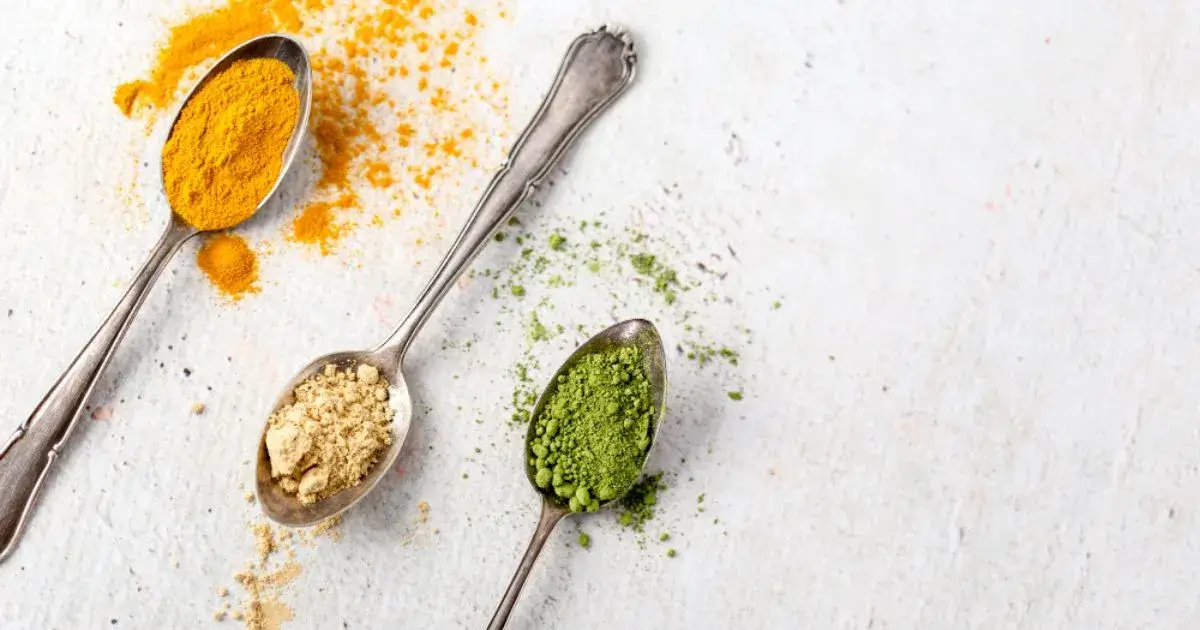
Turmeric, spirulina, and berberine are often marketed together as a metabolic-support supplement stack.
This is different from the standard turmeric hack for weight loss, which usually refers to a simple drink made with turmeric, water, lemon, and black pepper.
People combine these three ingredients because each one is linked to different claims around inflammation, lipids, blood sugar, or appetite. But stacking them does not automatically create a stronger weight-loss effect.
Below, we’ll look at what turmeric, spirulina, and berberine may do individually, what the evidence says about combining them, and which safety issues matter most.
Why People Stack Turmeric With Spirulina and Berberine
The “turmeric hack” didn’t start in a lab. It started online.
Short-form videos, wellness influencers, and supplement brands began promoting turmeric as a daily metabolic shortcut — a quick ritual that supposedly supports fat loss, reduces inflammation, balances blood sugar, and “detoxes” the body.
The word hack made it irresistible. It suggests efficiency. A shortcut. A hidden edge.
But turmeric itself has been used for centuries. What’s new is the framing.
Common Versions of the Turmeric Hack
You’ll typically see it presented in a few ways:
- Turmeric shots (often with lemon, ginger, or cayenne)
- Turmeric + warm water first thing in the morning
- Capsules standardized for curcumin
- Stacked formulas that combine turmeric with spirulina, berberine, black pepper extract, or other metabolic ingredients
The idea is simple: take it daily and let it “work in the background.”
Here’s the critical clarification:
A “hack” is a marketing term — not a medical one.
There is no clinical category called a turmeric hack.
There are only studies on curcumin (the active compound in turmeric) and its effects on inflammation, oxidative stress, and certain metabolic markers.
Some of those findings are promising. None of them suggest instant transformation.
Evidence First, Not Hype
Research does support turmeric’s role as an anti-inflammatory and antioxidant compound. However:
- Effects are typically modest
- Dosages used in studies are often higher than kitchen use
- Bioavailability is low unless combined with absorption enhancers (like piperine)
So before adding spirulina or berberine into the mix, it’s important to anchor expectations in reality.
Turmeric/Curcumin — Benefits & Limits
Turmeric is a root. The real activity comes from curcumin, its primary bioactive compound.
Curcumin has been widely studied for two core properties:
- Anti-inflammatory effects
- Antioxidant activity
Inflammation and oxidative stress are linked to metabolic dysfunction, insulin resistance, and cardiovascular risk.
That’s why curcumin continues to attract scientific interest.
Not because it’s trendy — but because it interacts with biological pathways involved in chronic disease.
Curcumin has low natural bioavailability.
Your body does not absorb it efficiently unless it’s paired with compounds like piperine (from black pepper) or delivered in enhanced formulations.
That matters more than most marketing mentions.
What the Research Actually Shows
Clinical studies suggest curcumin may:
- Help reduce markers of systemic inflammation
- Improve triglyceride levels
- Support modest improvements in blood glucose control
- Reduce oxidative stress markers
Some trials involving individuals with metabolic syndrome or type 2 diabetes show improvements in inflammatory biomarkers and lipid profiles. That’s promising.
But promising is not the same as dramatic.
Most findings show incremental support, not transformation.
Effects tend to be modest, dose-dependent, and most meaningful in individuals already experiencing metabolic dysfunction.
In healthy individuals, benefits may be subtle.
Spirulina — The Superfood Algae
Spirulina is a blue-green algae rich in nutrients. It’s been studied for decades and is classified by the FDA as Generally Recognized as Safe (GRAS) when produced under controlled conditions.
What makes it stand out?
- High-quality plant protein (about 60–70% by weight)
- B vitamins
- Iron
- Phycocyanin (a powerful antioxidant pigment)
- Trace minerals
Unlike many “superfoods” that rely on branding, spirulina’s nutrient density is measurable.
Gram for gram, it delivers concentrated micronutrients and antioxidant compounds.
That said, it’s still a supplement — not a replacement for whole foods.
Evidence in Humans
Clinical research suggests spirulina may:
- Improve LDL and total cholesterol levels
- Support reductions in triglycerides
- Enhance antioxidant status
- Modestly support blood pressure regulation
Some studies show measurable improvements in lipid markers, particularly in individuals with metabolic imbalance.
However, effects are generally modest and more noticeable when combined with dietary improvements and physical activity.
In other words, spirulina appears to support metabolic health — but it doesn’t independently drive weight loss.
The benefits seem to be supportive, not transformative.
Berberine — The “Nature’s Ozempic” Buzz
Berberine is the ingredient that pushed this stack from “wellness ritual” to metabolic headline.
It’s often labeled “nature’s Ozempic.” That comparison is bold. It’s also oversimplified.
Let’s unpack what berberine actually is — and what it isn’t.
What Berberine Is
Berberine is a bioactive compound extracted from several plants, including barberry and goldenseal.
It has been used in traditional systems of medicine for gastrointestinal and metabolic concerns long before it became a supplement trend.
What changed recently?
Interest in blood sugar control, insulin resistance, and weight regulation surged — and berberine started appearing in metabolic-focused stacks.
Its appeal comes from its effect on a key cellular pathway.
What the Research Suggests
Berberine appears to activate an enzyme called AMPK (adenosine monophosphate–activated protein kinase).
AMPK is sometimes described as a metabolic “master switch.” When activated, it helps regulate:
- Glucose uptake
- Fat metabolism
- Energy balance
Clinical research suggests berberine may:
- Improve insulin sensitivity
- Lower fasting blood glucose
- Reduce HbA1c in people with type 2 diabetes
- Improve LDL cholesterol and triglycerides
- Contribute to modest reductions in body weight in some individuals
The key word is modest.
While results are promising — particularly for blood sugar regulation — weight loss outcomes tend to be mild and gradual, not dramatic.
Berberine works more like a metabolic regulator than a rapid fat-loss agent.
Important Limitations
There are practical constraints:
- Low bioavailability (absorption can be inconsistent)
- Gastrointestinal side effects in some individuals
- Potential interactions with medications (especially diabetes drugs and blood pressure medications)
- Not approved as a prescription medication
And most importantly:
Berberine is not equivalent to GLP-1 medications.
It does not replicate their mechanism of action, potency, or clinical weight-loss outcomes.
The “natural Ozempic” label is marketing shorthand — not a scientific comparison.
Does Combining Turmeric + Spirulina + Berberine Work?
On paper, the combination sounds powerful.
- Turmeric (curcumin) targets inflammation and oxidative stress
- Spirulina contributes antioxidants and lipid support
- Berberine influences glucose metabolism and AMPK activation
There’s overlap. There’s logic. There’s a compelling narrative about “synergy.”
But here’s what matters:
Mechanistic overlap is not the same as proven synergy.
The Synergy Claim
Supplement brands often combine these ingredients because they act on related pathways:
- Inflammatory signaling
- Oxidative stress reduction
- Lipid metabolism
- Glucose regulation
The theory is straightforward:
If each ingredient supports metabolic health individually, combining them should amplify the effect.
That sounds reasonable.
The problem? High-quality human trials studying all three together are extremely limited.
What Research Actually Shows
We have:
- Clinical studies on curcumin alone
- Clinical studies on spirulina alone
- Clinical studies on berberine alone
We do not have robust, long-term, placebo-controlled trials evaluating this specific triple stack in humans.
That means any claims about enhanced fat loss, accelerated metabolic repair, or amplified results from combining them are largely theoretical.
Some benefits may overlap. Some effects may be additive.
But this has not been definitively established in clinical settings.
The Evidence-Based Perspective
Each ingredient has potential — especially berberine for glucose control and curcumin for inflammation.
Spirulina may support lipid markers and antioxidant status.
However:
There is currently no strong clinical evidence proving that the turmeric + spirulina + berberine combination produces superior outcomes compared to individual use.
Could they complement each other? Possibly.
Is there solid proof of amplified results? Not yet.
For now, the triple stack remains a hypothesis-supported blend — not a clinically validated metabolic breakthrough.
And that distinction matters.
Safety & Precautions
Natural does not automatically mean low-risk.
Each of these compounds has a safety profile — and when combined, the variables increase.
Common Side Effects
Most reported issues are gastrointestinal:
- Nausea
- Diarrhea
- Stomach cramping
- Bloating
Berberine, in particular, can cause digestive discomfort at higher doses. Curcumin may also irritate the stomach in sensitive individuals.
Spirulina is generally well tolerated but can cause mild digestive upset in some users.
There are also less common but important considerations:
- Potential liver stress at very high doses or in low-quality supplement products
- Contamination risk with poorly sourced spirulina
- Variability in absorption and potency across brands
Quality control matters more than marketing claims.
Medication Interactions
This is where caution becomes essential.
Berberine may interact with:
- Diabetes medications (risk of blood sugar dropping too low)
- Blood pressure medications
- Certain medications metabolized by liver enzymes
Curcumin may influence:
- Blood thinners (potential additive anticoagulant effect)
- Antiplatelet drugs
Spirulina may not be suitable for individuals with autoimmune conditions without medical supervision.
The key issue isn’t that these supplements are inherently dangerous.
It’s that they can amplify or interfere with prescription medications.
When to Seek Medical Guidance
Consult a qualified healthcare provider before using this combination if you:
- Take diabetes medications
- Use statins or cardiovascular drugs
- Take blood thinners
- Have liver disease
- Are pregnant or breastfeeding
- Manage a chronic medical condition
Supplements can influence biological systems in meaningful ways. That’s why they require the same level of caution as any therapeutic tool.
Used thoughtfully and under guidance, these compounds may support metabolic health.
Used casually — especially alongside medications — they carry avoidable risk.
How to Use These Ingredients (Evidence-Based)
If you’re considering this stack, practicality matters more than hype. The goal isn’t to “hack” your metabolism.
It’s to use compounds in a way that aligns with how they were studied.
Turmeric / Curcumin
Using turmeric in cooking is fine — but most clinical trials examine standardized curcumin extracts, not a pinch in food.
Key considerations:
- Pair turmeric with black pepper (piperine) to improve absorption.
- Look for formulations that enhance bioavailability (phytosome or liposomal forms).
- Clinical studies often use 500–1,500 mg of curcumin per day, divided into doses.
Important distinction:
A teaspoon of turmeric powder does not equal a standardized curcumin dose used in trials.
If supplementing, check the label for actual curcumin content — not just turmeric weight.
Spirulina
Spirulina is more straightforward.
It can be:
- Mixed into smoothies
- Taken in capsule or tablet form
- Added to protein blends
Clinical trials typically use 1–3 grams per day, sometimes up to 5 grams depending on the study.
More is not automatically better. Higher doses may increase digestive discomfort without improving outcomes.
Also:
Choose brands tested for heavy metals and contaminants.
Quality control is critical with algae-based products.
Berberine
Berberine requires the most structure.
Research protocols commonly use:
- 500 mg, two to three times daily (total 1,000–1,500 mg per day)
- Taken with meals to reduce gastrointestinal side effects
Consistency matters more than timing tricks.
Because berberine influences glucose metabolism, it’s especially important to monitor for symptoms of low blood sugar if you’re on medication.
Practical Stacking Guidance
If combining:
- Start one ingredient at a time
- Introduce gradually over 1–2 weeks
- Monitor digestion, energy, and tolerance
- Avoid megadosing
And remember:
The doses used in clinical research are controlled, standardized, and monitored. Over-the-counter products vary significantly in potency and purity.
Supplements should support a structured routine — balanced nutrition, strength training, sleep, and calorie awareness — not replace it.
Used correctly, these compounds may enhance metabolic resilience.
Used carelessly, they add cost without measurable return.
Conclusion
There is no magic turmeric hack. There is no metabolic shortcut hidden inside a capsule.
What we do have is something more grounded — three compounds with measurable biological effects, each supported by varying degrees of clinical research.
- Curcumin may help modulate inflammation and oxidative stress.
- Spirulina may support lipid balance and antioxidant status.
- Berberine shows the strongest evidence for glucose regulation and metabolic support.
But none of them override the fundamentals.
Supplements can support physiology. They cannot replace lifestyle.
When used responsibly — alongside structured nutrition, resistance training, sleep optimization, and calorie awareness — these ingredients may enhance metabolic resilience. Used alone, without those foundations, results are typically mild.
Actionable Takeaways
- Anchor expectations in science, not social media.
- Use standardized, third-party–tested supplements.
- Introduce one ingredient at a time to assess tolerance.
- Follow clinically studied dosage ranges.
- Avoid stacking without medical guidance if you take prescription medications.
- Prioritize diet quality and movement first — supplements are secondary.
If you view turmeric, spirulina, and berberine as tools rather than hacks, you’re far more likely to use them effectively.