How to Eat to Burn Fat & Build Muscle

When it comes to transforming your body — burning fat while building lean muscle — your diet does the heavy lifting.
It fuels your workouts, repairs your muscles, and determines whether your body stores fat or sheds it.
The key isn’t just eating “clean” — it’s eating strategically.
That means dialing in your macronutrients: prioritizing high-quality protein, choosing the right carbs (yes, you still need them), and getting healthy fats in the right balance.
And just as important? Food quality — not all proteins, carbs, or fats are created equal.
Whether your goal is to drop stubborn weight, build muscle, or both, understanding how to eat for body composition can be a game-changer.
The Importance of a Balanced Diet
A balanced diet is the cornerstone of good health. It provides the body with the essential nutrients it needs to function optimally.
Let’s break down the role of different nutrients in the body:
- Proteins: Known as the building blocks of the body, proteins are crucial for muscle growth and repair. They also play a role in the production of enzymes and hormones.
- Carbohydrates: They are the body’s primary source of energy. Carbohydrates are broken down into glucose, which is used by our cells for energy.
- Fats: Despite their bad reputation, fats are essential for the body. They provide energy, support cell growth, protect our organs, and help in the absorption of certain nutrients.
- Vitamins and Minerals: These are vital for various bodily functions, including immune function, bone health, and energy production.
Now, how does a balanced diet contribute to weight loss and muscle gain?
When it comes to weight loss, a balanced diet helps maintain a calorie deficit, which is when you consume fewer calories than you burn.
This deficit forces your body to use stored fat for energy, leading to weight loss.
For muscle gain, a balanced diet ensures you’re getting enough protein, which is essential for muscle growth.
Additionally, consuming a surplus of calories, particularly from nutrient-dense foods, can support muscle growth when combined with resistance training.
Top Diets of 2024
Choosing the right diet plays a crucial role, but with so many options out there, it can be overwhelming to know which one is best for you.
Mediterranean Diet:
This diet is inspired by the eating habits of people living in the Mediterranean region.
- It emphasizes the consumption of fruits, vegetables, whole grains, nuts, legumes, and fish, with olive oil as the primary source of added fat.
- Red meat, sugar, and saturated fats are limited.
- The Mediterranean diet is associated with a lower risk of heart disease, certain cancers, diabetes, and cognitive decline.
- It’s also beneficial for weight management and overall wellness.
DASH Diet:
The Dietary Approaches to Stop Hypertension (DASH) diet was initially developed to lower blood pressure without medication.
- It encourages the consumption of fruits, vegetables, whole grains, lean meats, and low-fat dairy, while limiting foods high in saturated fats and sugar.
- The DASH diet is recognized for its benefits on heart health, and it can also aid in weight loss.
Flexitarian Diet:
The Flexitarian diet is a flexible approach to vegetarianism.
- Followers eat mostly plant-based foods but can also include meat and other animal products in moderation.
- The diet is rich in fiber, which aids in digestion and helps in weight management.
- It also offers the health benefits associated with vegetarian diets, such as reduced risk of heart disease, diabetes, and certain cancers.
WeightWatchers Diet:
WeightWatchers, now known as WW, uses a points system to guide food choices.
- Every food and drink is assigned a point value based on its nutrition, and users are given a daily and weekly points budget.
- The focus is on whole, nutrient-dense foods that keep you feeling fuller, and longer.
- The program also encourages physical activity and provides support through in-person meetings and online tools.
MIND Diet:
The MIND (Mediterranean-DASH Diet Intervention for Neurodegenerative Delay) diet is a hybrid of the Mediterranean and DASH diets.
- It specifically includes foods and nutrients that medical literature and data show to be good for the brain, such as berries, green leafy vegetables, other vegetables, nuts, beans, whole grains, fish, poultry, olive oil, and wine.
- It’s associated with a reduced risk of Alzheimer’s disease and slower cognitive decline.
Vegetarian Diet:
A Vegetarian diet excludes meat and meat by-products, with some variations also excluding dairy, eggs, and other animal products.
- It’s rich in fruits, vegetables, whole grains, legumes, nuts, and seeds.
- A well-planned vegetarian diet can provide all the necessary nutrients for a healthy lifestyle and has been linked to lower risks of heart disease, high blood pressure, type 2 diabetes, and obesity.
Noom Diet:
Noom is a comprehensive weight loss program that combines a personalized diet plan with cognitive behavioral therapy to change eating habits.
- It categorizes foods into green (e.g., fruits, vegetables, whole grains), yellow (e.g., lean proteins, starches), and red (e.g., red meats, processed foods) based on their caloric density and concentration of nutrients.
- Noom encourages consuming more green and yellow foods and fewer red ones, without banning any foods.
Understanding Macronutrients for Fat Loss and Muscle Gain
Macronutrients are the important nutrients our bodies need a lot of to work well. They include proteins, carbohydrates, and fats.
Each plays a unique role in our health and fitness goals.
- Proteins: Proteins are essential for muscle repair and growth. When you exercise, your muscle fibers break down and rebuild. Proteins provide the necessary amino acids for this process. For muscle gain, it’s recommended to consume about 1.6 to 2.2 grams of protein per kilogram of body weight.
- Carbohydrates: Carbohydrates are the body’s primary source of energy. They fuel your workouts and help spare protein for muscle repair and growth. The amount of carbohydrates you need can vary based on your total caloric intake and fitness goals.
- Fats: Fats play a vital role in hormone production, including hormones like testosterone which are crucial for muscle growth. While fats are higher in calories than proteins and carbohydrates, they’re necessary for optimal health and performance.
When it comes to fat loss and muscle gain, the balance of these macronutrients and your total caloric intake is key.
- For fat loss, you need to maintain a caloric deficit, which means you consume fewer calories than you burn. This encourages your body to use stored fat for energy.
- For muscle gain, a caloric surplus is often recommended. This means you consume more calories than you burn, providing your body with the extra energy needed to build muscle.
Here’s a sample plan:
For Fat Loss:
- To shed pounds, you need to create a caloric deficit, meaning you burn more calories than you consume.
- Focus on moderate protein intake (0.8-1 gram per pound of body weight) to preserve muscle, keep carbs moderate (40-50% of daily calories), and prioritize healthy fats for satiety.
For Muscle Gain:
- Building muscle requires a caloric surplus, consuming more calories than you burn.
- Crank up your protein intake (1-1.5 grams per pound of body weight) to provide the building blocks, increase carbs moderately (40-50% of daily calories) for energy, and don’t shy away from healthy fats (20-30% of daily calories) for hormone support.
Foods to Include in Your Diet
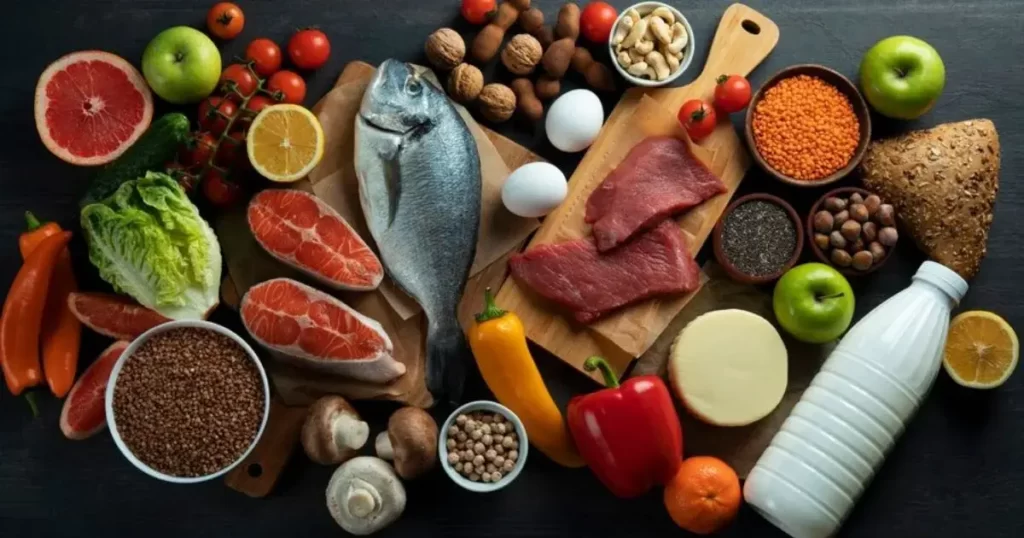
Here are 21 foods that can help you lose weight and gain muscle:
- Eggs: They are great for a high-protein diet, containing lots of leucine, an amino acid important for gaining muscle. They also have good fats and B vitamins, which are crucial for making energy in our bodies.
- Chicken Breast: Chicken is an important food to help gain muscle. A three-ounce serving has a generous 26 grams of high-quality protein.
- Salmon: Salmon is packed with health benefits. It’s low in fat, helping you maintain your weight and lose belly fat. It also contains Omega-3 fatty acids which decrease your risk of cancer, lower your blood pressure, and lower inflammation.
- Chickpeas: Chickpeas are a great source of plant-based protein, making them an excellent food choice for those trying to lose weight and gain muscle.
- Lentils: Lentils are high in protein and fiber, making them a great food for weight loss and muscle gain.
- Peas: Peas are a good source of vegetable protein along with having a decent amount of fiber.
- Kidney Beans: Kidney beans are high in protein and fiber, both of which aid in weight loss and muscle gain.
- Black Beans: Black beans are packed with fiber and protein, making them a great food for muscle gain and weight loss.
- Soybeans: Soybeans are a great source of plant-based protein. They can be a good option for those trying to lose weight and gain muscle.
- Pinto Beans: Pinto beans are high in protein and fiber, which can help with weight loss and muscle gain.
- Navy Beans: Navy beans are high in protein and fiber, making them beneficial for weight loss and muscle gain.
Conclusion
Remember, while these diets and foods are backed by science, individual needs and responses can vary.
It’s important to choose a diet and foods that suit your lifestyle, dietary preferences, and health goals.
Before making significant changes to your diet or starting a new fitness regimen, always consult with a healthcare professional.
They can offer advice tailored to you by considering your health history and current situation.